In the lead-up to last year's annual game jam, GAMERella incorporated, becoming an official non-profit organization. Hats off to Gina and Courtney for spearheading that effort and all the paperwork it entailed. However, we weren't finished yet. Leading into 2025, with the GAMERella Mentorship Program on the horizon, I stepped into a more technical role. I spent early Spring developing a new website and finding software alternatives for the team.
As an organization predicated on social change and accountability, we knew we wanted to distance ourselves from the uncomfortable Google hegemony (especially with yet another controversy at the time). Beyond that, we were also searching for alternatives for data storage, website hosting, and collaborate document-writing.
In this blog post I hope to detail what we found, as well as include some 3rd-party game development solutions, and address more philosophical concerns relating to the social media attention economy and software fatigue. More and more, the tools that we use (originally designed for efficiency and innocuousness) are vying for our attention and our valuable usage data. As they absorb AI-powered content slop and and eat into our browsers' RAM, a switch to 3rd party solutions becomes increasingly liberating.
Detailed below is a list of software alternatives that we found to be effective, cheap, and reliable.
Disclaimer: Being committed to using 3rd party software alternatives means accepting that moving between tools is part of the practice. It's not uncommon to find that, after a few months of using a new software, it's not right for you. The tools listed below are a starting point, informed by the knowledge and experiences we have gathered as individuals and as a team.
Let's get the obvious out of the way. These first few are potential solutions for the tools we use most regularly in our day-to-day lives.
Firefox As an alternative to Google Chrome
Firefox is, without a doubt, a hill I will die on. When I say that everyone uses Google Chrome, I mean everyone. As of September 2025, Chrome has a market share of nearly 72% (Sims, 2025). Its browser is infamously known for its appalling overuse of your computer's memory, and it's probably Google's most powerful tool to collect your data. That isn't even considering the fact that other popular browsers such as Opera, Brave, or Vivaldi are based on Chromium (the base architecture of Google Chrome). The only two truly popular browsers in the world that are not derived from Google Chrome are Safari and Firefox.
Dislike for Chrome aside, Firefox stands on its own. It is an open-source browser developed by Mozilla, equipped with a myriad of features that go above and beyond. It shares a lot of common features between other browsers, but consistently puts in the extra effort to make them safe, easy to use, and transparent. Here's a list of some of useful features:
If you're looking for a great search engine to go along with Firefox, I recommend Ecosia. It plants a tree for every 45 searches you make! DuckDuckGo is another popular one.
Notion As an alternative to Google Docs & Sheets
I started using Notion last year for personal projects, and instantly fell in love with it. It's a collaborative document-writing software/website with a focus on databases and nested pages. It's easy to write shared documents together in real-time, and its page organization features (i.e. treating each paragraph as a block that can be further transmuted into quotes, sub-columns, collapsible sections, etc.) tow a great line between user-friendly and endlessly customizable. It's prefect for formatting nerds like me.
With even just a little more familiarity, Notion's database system can be a nice replacement for Google Sheets. It's got a ton of granular categories, sorting, grouping, and filtering options for those of us who love crunching data. Even simple 5-10 entry inline databases can be put together in seconds. Lastly, databases can easily be converted from one type to another, should you wish to convert your long list of items into a nice visual gallery, for example.
Disclaimer: As of late, Notion has been really pushing its AI features. This sucks, but the features are so far entirely optional, and the rest of the software still works great.
EthicalHosting As an alternative to Hostinger / Namecheap / GoDaddy / BlueHost
During the search for a good website host for the updated GAMERella website, we stumbled upon EthicalHosting. They are a Toronto-based host 100% powered by renewable sources and carbon offsets, and make annual and other regular donations to social and environmental organizations. It feels great to know that GAMERella's website data is being stored on Canadian soil, in environmentally friendly conditions, by real humans, at a reasonable cost.
I didn't have room to list all possible general-use alternatives here, so here are a few more that I recommend:
Luxe / Bitsy / Bevy / Twine / Adventuron / etc. As an alternative to Unity / Unreal
As a developer, I understand the power of the long-established and well documented game engines that most of us start our journeys learning. However, more and more I find myself drawn to the engines that lie on the margins of use. Taking the time to understand even the basics of these lesser-used tools can really help to round out a game developer’s problem-solving and creative toolkit.
The truth to the question “which engine should I learn?” has never been “the biggest one out there”. The answer is “the one that lets you express yourself to the fullest”. That might end up being one of the major ones, but it doesn’t have to be. Inspiration is all around.
Mesh2Motion As an alternative to Mixamo
Mixamo is a great tool and library for rigging and animating 3D characters. It’s the default for many people, and it’s the one I learned to use for game jams and other small projects. The problem is, as a software owned by Adobe, there has always been a discomfort in using it.
I recently learned about Mesh2Motion, a wonderfully 3rd party website to perform exactly the same functions as Mixamo, and it even has 4-legged animal rigs! Wholeheartedly recommend.
JetBrains As an alternative to VSCode / etc.
There’s no simpler way to say it but: JetBrains IDEs (ie. programs for writing code) are the absolute best ones available today. Intuitive, nice to look at, feature-rich, and full of their own plugins that you can add. I personally use JetBrains Rider every single day for work, and have absolutely no desire to return to Visual Studio. The best part is, every single one of their editors are free for students!
I didn’t have room to list all possible alternatives here, so here are a few more that I recommend:
Forcing yourself to change tools is no easy task. Whether it’s a personal choice or a required software from your work/school, the amount of websites and applications that we’re using can often feel overwhelming. The solutions to these problems are never straightforward, but a dual approach of simplification and community support is the starting point (Tobelaim, 2025).
Finding tools that perform multiple tasks is great. Maybe the 3D materials you design in your modelling software can be exported over rather than having to be re-engineered in your game engine. Maybe the writing software you use to take notes as a team can also house your images or PDF diagrams.
Furthermore, working together as a team can help to demystify and share the burden of new software. Either for work, with friends, or in online forums, discussing what works and what doesn’t, and ways to improve usage help a lot to break down the overwhelming barriers.
There’s no cure-all for software fatigue, and it’s undoubtedly true that we as people and organizations alike have adopted a website or software for pretty much everything. Jumping into third party software can trigger these feelings, but with a mind for exploration and community discussion, we can all come out the other end using responsible tools that better suit our needs.
Lately, I’ve been thinking a lot about boredom and discomfort. The desire as soon as you wake to check your phone. Feeling unsettled if you’re not able to watch something while you eat your lunch. The monotony of commuting. These are emotional responses that, while in many aspects timeless, have been driven lately through the attention economy of the apps and websites that we use. It feels more and more like attention is money these days for major tech platforms.
Without trying to sound too dramatic: considering the ways in which Chrome, Adobe Cloud, Windows 11, and ChatGPT present themselves to us, the switch to thoughtfully-developed is feeling more and more urgent. Not unlike the sanctity of work-life balance, we need to value the time we deliberately take away from the things that profit from our attention. The initiatives are out there, the utopic torch of the personal computing movement still held aloft in their hands.
Take this blog post as a starting point. I’d love to hear your thoughts about the tools that I’ve recommended. If they turn out flawed, let’s re-evaluate. This is the conscious effort, the good work, that is required to ever so slowly break us away from hegemony.
I highly recommend the book Busy Doing Nothing by Rekka Bellum and Devine Lu Linvega (Bellum & Linvega, 2025). The two form the members of the artist collective 100 Rabbits (100R — home, 2025). The short book chronicles the day-to-day lives of the authors as they sail across the Pacific ocean, all the while developing software, fixing problems on the boat, and finding ways to keep themselves engaged. It has a very well-written epilogue that was the inspiration for this final section.
The internet was made to share, and we were meant to create. If you’re attending this year’s GAMERella Game Jam, maybe try and plan to use any of the tools listed above. It might make for a better game!
Sims, D. (2025, October 2). Google Chrome dominance grows, hits record 72% market share. Techspot. https://www.techspot.com/news/109708-google-chrome-dominance-grows-hits-record-72-market.html
Tobelaim, A. (2025, February 23). Overcoming Tool Fatigue: A Guide to Simplifying Workplace Tools & Processes. The Pulse of IT. https://www.siit.io/blog/overcoming-tool-fatigue-guide
Bellum, R., & Linvega, D. L. (2021). Busy Doing Nothing. https://100r.co/site/busy_doing_nothing.html
100R — home. (n.d.). Retrieved September 26, 2025, from https://100r.co/site/home.html
Let's flash back to Sunday, June 15th.
For the last two months, we've been locked in on our collaboration channels. Living in our inboxes. Seeing in colour-coded timelines composed of sticky notes. Now we're here on the morning of our launch call, adding some last-minute script-pacing notes for the onboarding orientation. And before we knew it, there everyone was: GAMERella's inaugural cohort of our first-ever Mentorship Program.
GAMERella's Mentorship Program is the product of feedback we've received from our 13 years of jam participants expressing interest in some kind of long-term program to provide guidance in navigating the transition from baby game-maker to industry-ready. We know Game Jams are the bread and butter of learning the proverbial ropes of the games industry — we even contributed to “That's My Jam: Understanding the Value of Game Jams,” (which you can download for free here) a white paper by Michael Iantorno investigating jams, jammers, and how it helps them make the bread. Jams are great! Our people want more jam!
So that's what we did. With the help of Canada Media Fund we put together the Mentorship Program— a plan to help equity-deserving folks connect with industry professionals and arm them with the tools to break into the games industry. We have been so touched by our mentor pool, who have jumped at the chance to share the things they wish they'd known when they were just starting out, and absolutely amazed by the veritable talent of every single one of our mentees.
Almost a month later, those faces framed in Zoom windows became whole, embodied humans at our August Retreat. For the first time, we met up with our mentees in person before grabbing coffee together, before visiting the studio of Don't Nod here in town.
All those colour-coded sticky notes, timelines, emails, and meetings have turned into this incredible opportunity to uplift emergent game-makers by connecting them with folks open to sharing their professional knowledge and experience.
And we couldn't have done it without all the folks who came together to make this happen, such as our workshop presenters, mentors, Mentor Canada, Baby Ghosts Studio Development Fund, Don't Nod, Pixels & Poutine, EA Motive, 4th Space, Milieux Institute for Arts, Culture and Technology, and whoever invented Miro.
Flash back to today, August 15.
Summer's drawing to a close, our program is nearing it's halfway mark, and we've got the annual Game Jam coming up on the weekend of November 15th. We can't wait to see everyone again in (hopefully) cooler weather!
Jam sign-up link will be live from September 12: https://gamerella2025.eventbrite.ca
At GAMERella, we spend a lot of time thinking about creative expression. We design events that encourage whimsical creation, offer workshops that strengthen creative skills, and build spaces where people feel safe trying something new. We've watched hundreds of creators dive into their first game jam, transforming personal ideas into playable experiences.
But supporting creative expression is not just about helping people create. It's also about making sure that creations actually get seen, played, and celebrated. Because personal, exploratory work shouldn't just sit gathering dust on a shelf, but should be actually expressed and shared with others. The challenge is that spaces dedicated to celebration are rare, especially for non-commercial, indie, and experimental work.
"While Montréal has a solid ecosystem to support games as an industry (MIGS, La Guilde, Zone Indie, etc.) we are missing venues that highlight games for their artistic, innovative and critical approaches (whether commercial or not)."
- LUDODROME
Enter LUDOROME: An arcade celebrating the Montreal experimental games community, launched by the Milieux Institute for Arts, Culture and Technology
When: May 15th, 2025
Where: Société des arts technologiques (SAT)
450+ Attendees, 44 Games, 5 GAMERella Games
This one-day event brought over 450 (!) participants together to play games that pushed creative boundaries. Weird, wacky, wonderful, and welcoming games developed by people with a passion for the craft and an eagerness to share.
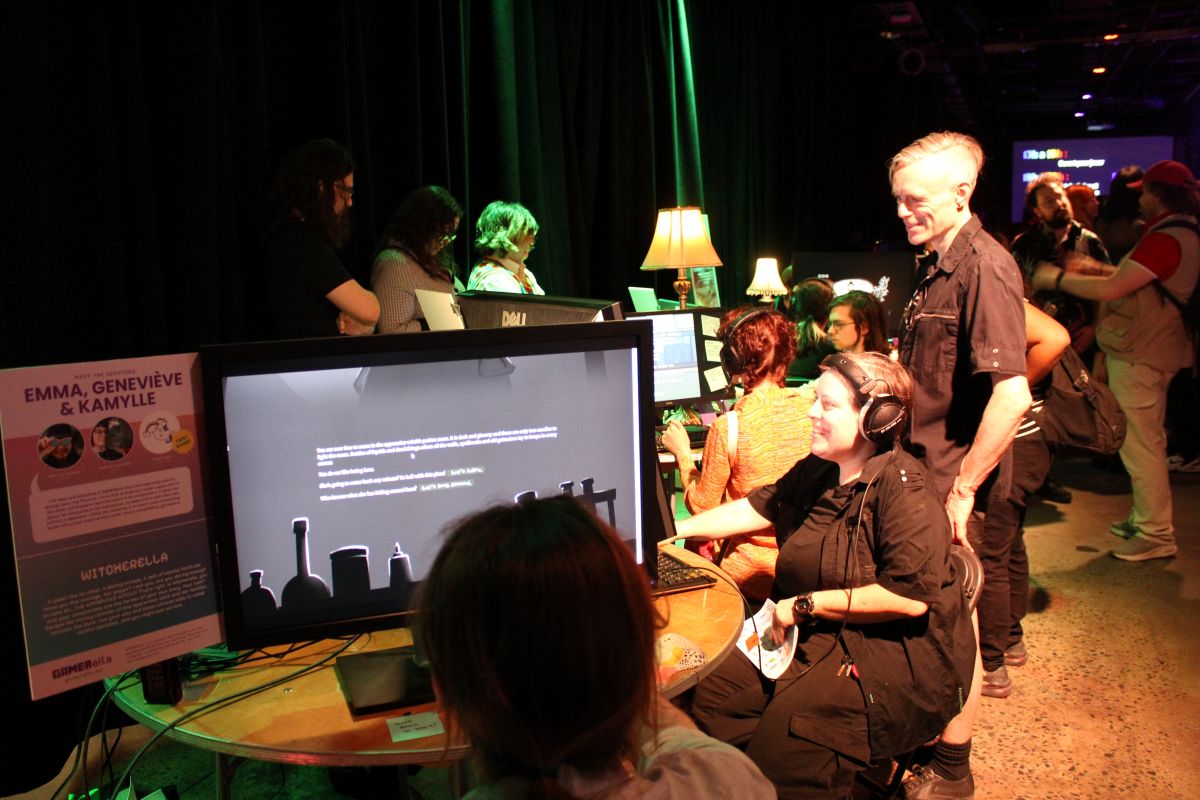
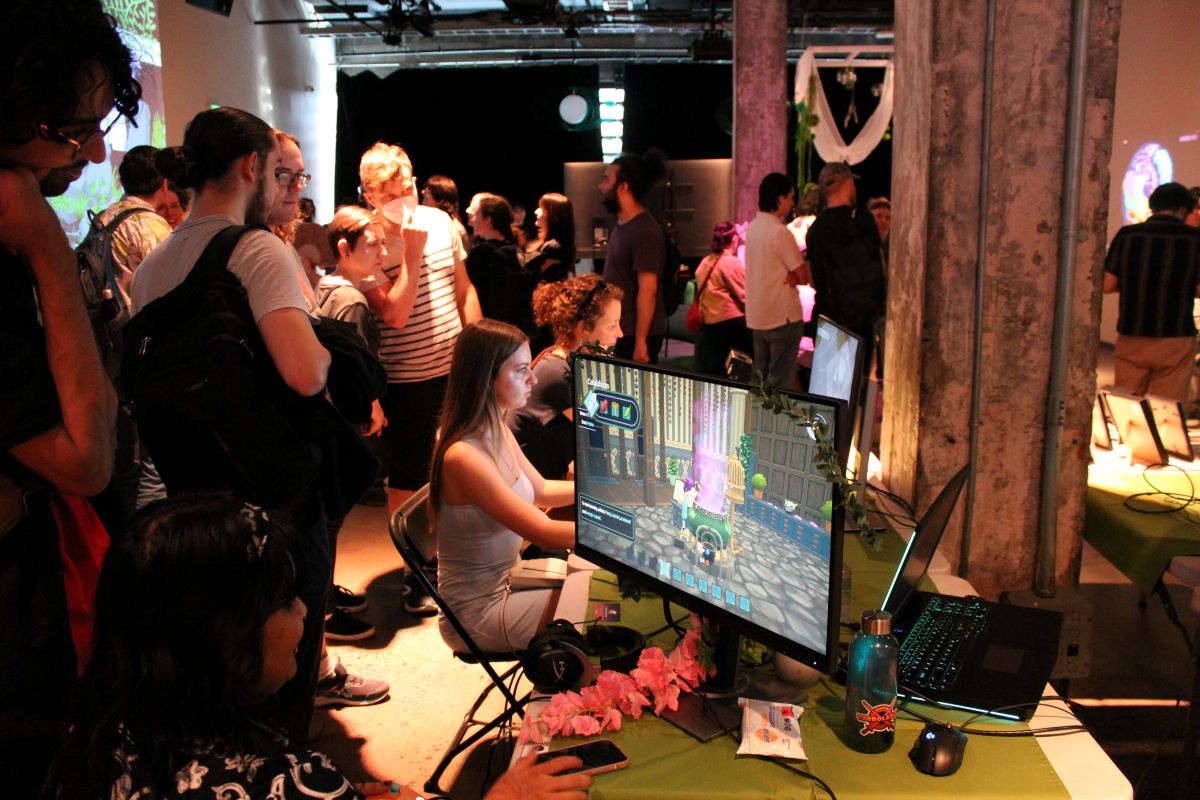
"We want to find exciting games wherever they can be found – solo work, indie and artists' studio work, and, of course, university research-creation initiatives; local games that beat with the experimental impulse, that explore new, wonderful, and eccentric mechanics, narratives, aesthetics and formats."
- LUDODROME
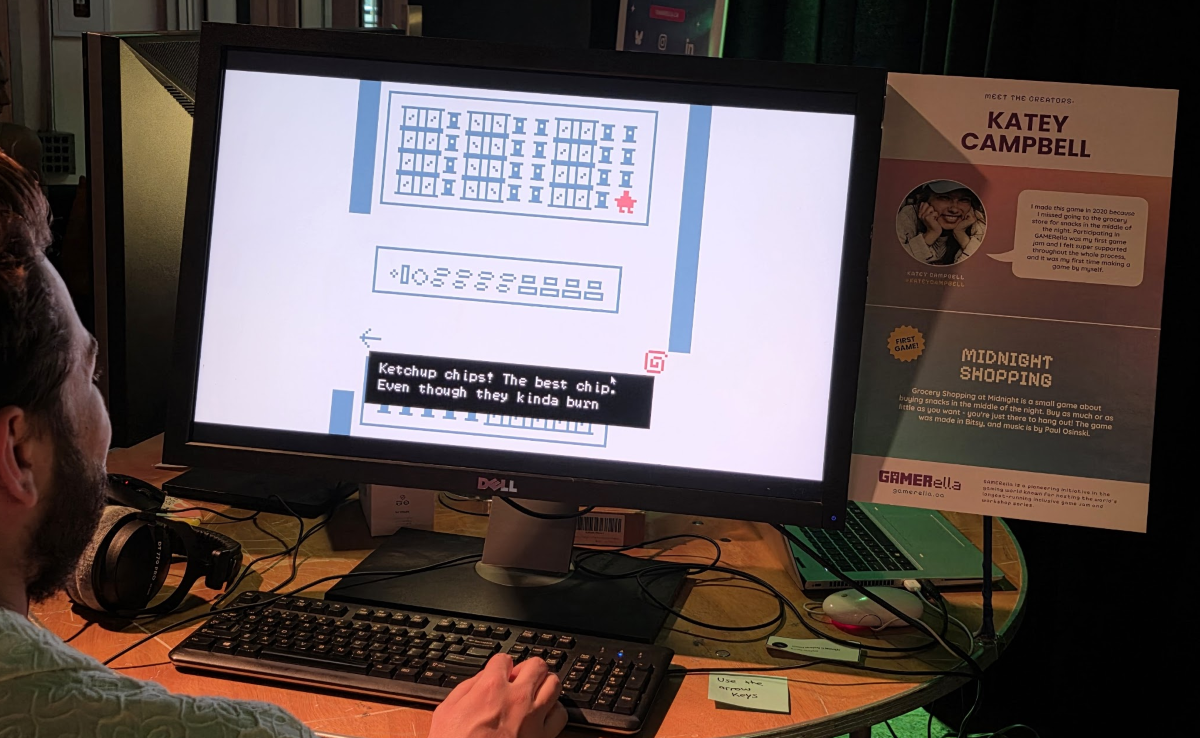
Of the 44 games on showcase, 5 were from our very own GAMERella jams! Created over the span of just two days, these games represent what it means to take a weekend and simply have fun making something. To try something new, step away from regular work, and experiment with novel tools and ideas.
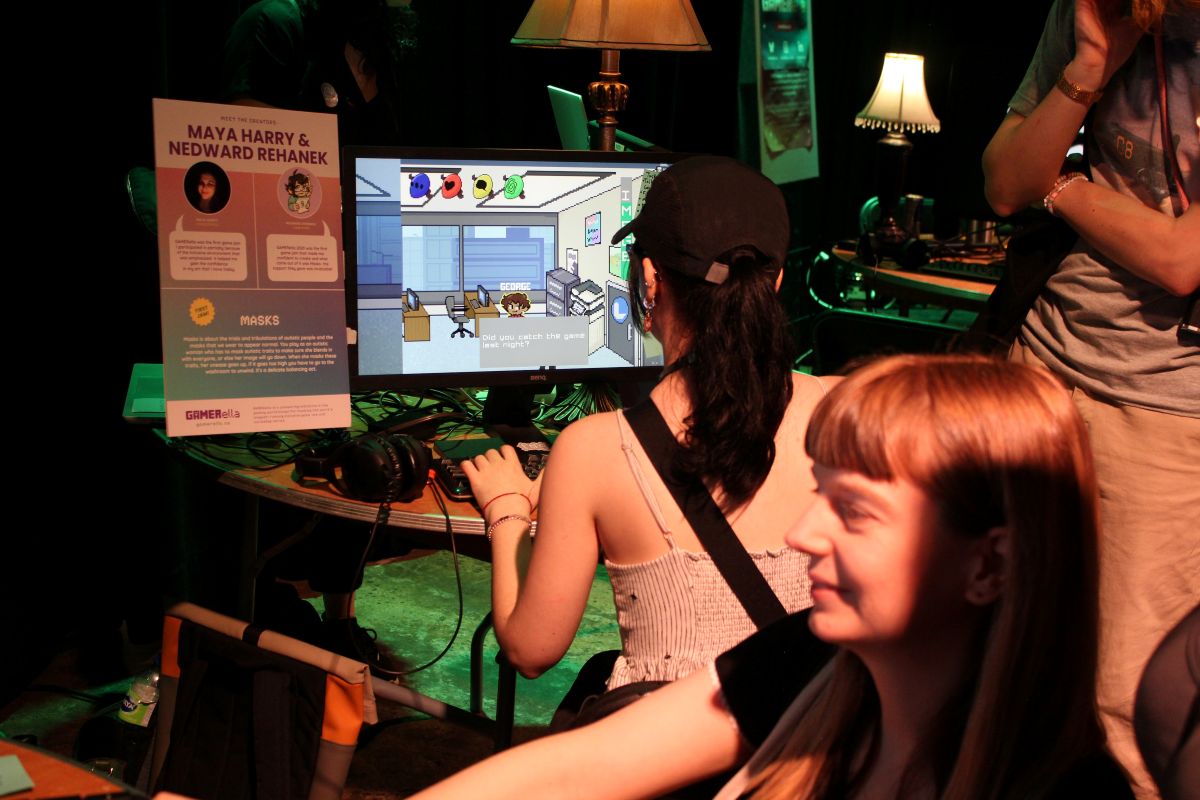
"[GAMERella] gives the space for everyone to be themselves, to experiment and take risks without judgment. I think the outcome is so much more interesting, exploratory and creative than other (more competitive) game jams."
- Kamylle Grenier (Witcherella)
GAMERella games at LUDODROME 2025:
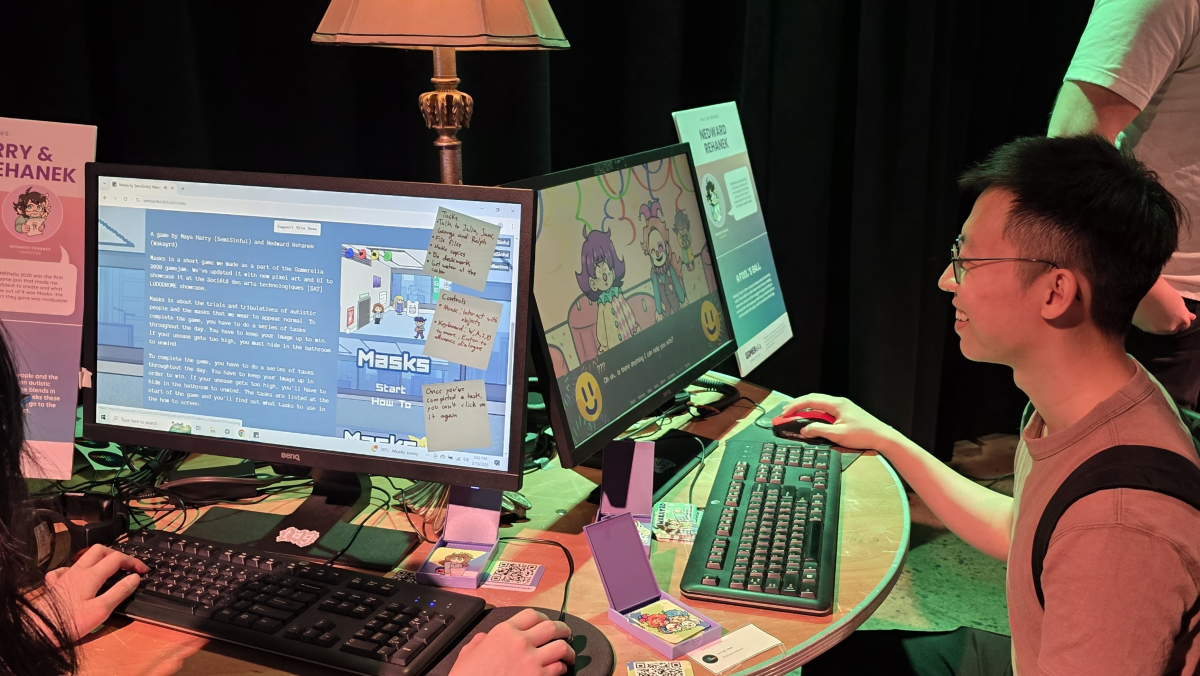
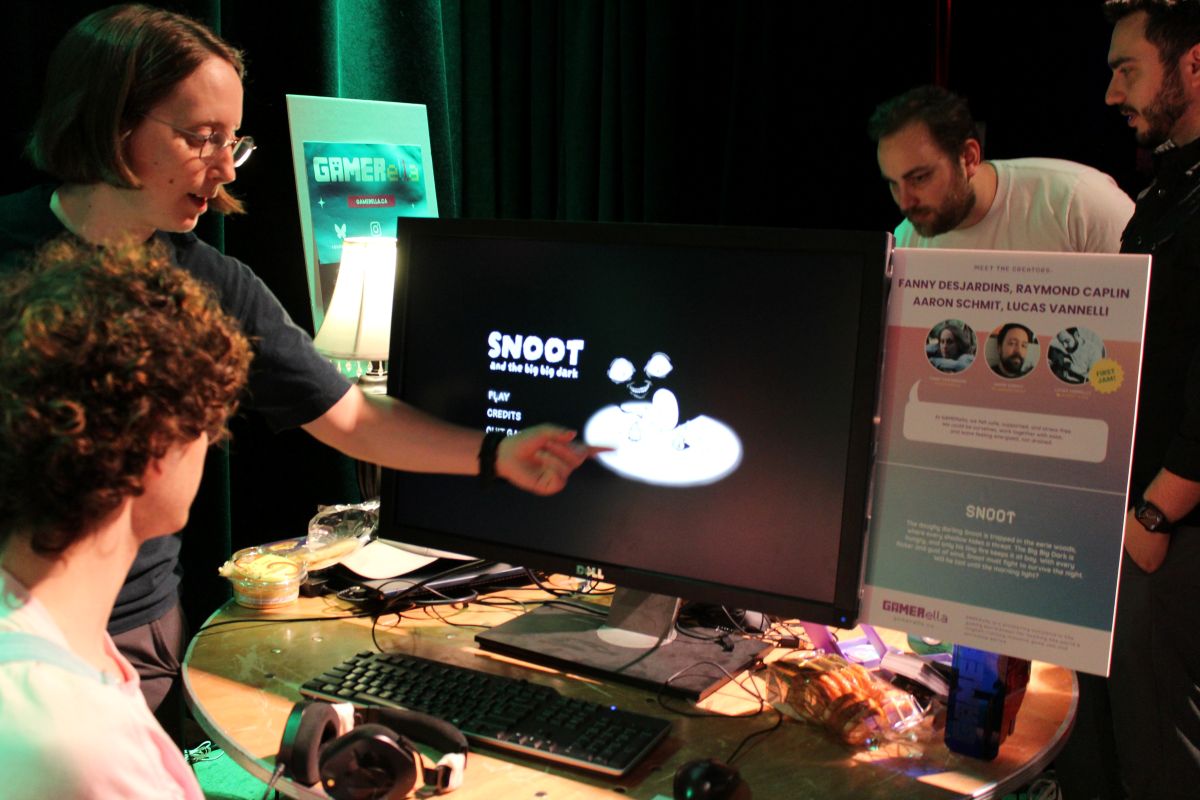
We curated the games from seven years of jams, representing everyone from first-time designers to seasoned jammers. From an arcade-style Bitsy to an immersive cozy horror, our games showcased what it means to create something deeply personal just for the sake of creation.
Watching experimental work being played, discussed, and celebrated was special. It sent a clear message: non-commercial, deeply personal work has value and deserves to exist.
"It honestly made me feel more confident in myself knowing that people actually enjoyed playing our game, and makes me feel hopeful about my future in the industry of making music for games."
- Lucas Vannelli (Snoot and the Big, Big Dark)
And celebratory spaces like LUDODROME don't just allow creators to put ideas out into the world. They also give the chance for creators (and players) to take ideas in, and be inspired by the voices of others.
"I don't think I've ever felt more grateful and inspired at the same time. More than ever, I want to make games. I feel more ready to make games and make art than ever."
- Maya Harry (Masks)
Although LUDODROME was only a 1-day event, we want to keep the party going! Our next big step is our first-ever mentorship program, which aims to support emerging creators and help them accelerate their journey in the games industry.
In November, you'll also find us at the Montréal International Games Summit (MIGS) and, of course, at our yearly GAMERella Game Jam!
If that seems too far away, we've got some other ways you can follow along with our work. Follow us on social media, sign-up for our newsletter, or support our work through our newly formed Patreon! Our Patreon is a dedicated GAMERella community where you can gain access to workshops, connect with like-minded gamemakers, and support spaces that promote creative expression.
LinkedIn: GAMERella Instagram: @gamerellajam Bluesky: @gamerella.bsky.social
And, if you know of any other cool, funky experimental events that celebrate diverse creators — let us know! We'd love to hear about it and join in on the fun.
We'd like to thank all the people that made LUDODROME a reality! For a more photos from the event, check out https://tag-milieux.ca/research-creation-projects/ludodrome-2025: